




Marble Countertops for Timeless Kitchens and Bathrooms in the UAE
Introduction
Few materials say “quality” as instantly as marble. Long after trends in cabinetry, tile, and paint have come and gone, marble countertops continue to define the kitchens and bathrooms that homeowners describe as timeless. For UAE villas, apartments, and boutique hospitality projects, marble countertops remain one of the most requested upgrades because they combine natural beauty with a sense of permanence that engineered materials struggle to match. This guide walks through what makes marble worth considering, the varieties available, and how it compares to the alternatives most buyers weigh it against.
Why Marble Remains a Top Choice for Countertops
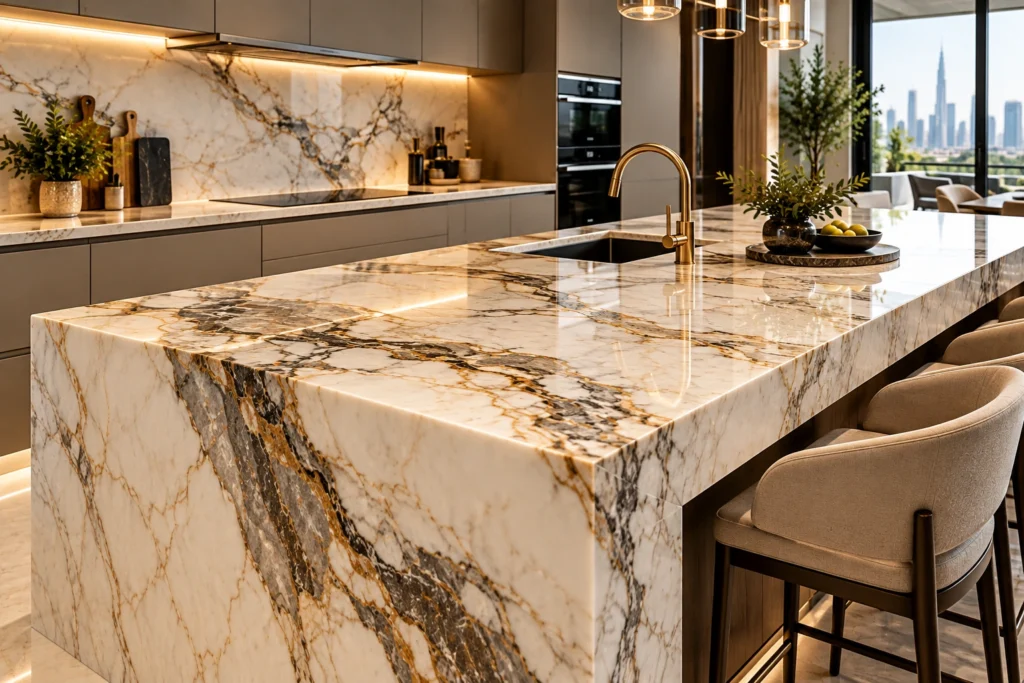
Marble is a metamorphic rock formed from limestone under intense heat and pressure, and that geological process gives it the soft, flowing veining that no engineered surface can fully replicate. Every slab is unique, which means a marble countertop instantly makes a kitchen or bathroom feel custom rather than mass-produced. Beyond looks, marble also has a naturally cool surface temperature, which many UAE homeowners appreciate for baking and food preparation.
Popular Marble Types for UAE Kitchens and Bathrooms
Marble comes in a wide range of colors and veining patterns, and the right choice depends on the overall design palette of the space. Some of the most requested varieties in the UAE include:
- Carrara Marble — soft white background with fine, feathery grey veining, a classic choice for bright, minimalist kitchens.
- Calacatta Marble — brighter white base with bold, dramatic veining, favored for statement kitchen islands.
- Emperador Marble — rich brown tones with subtle veining, popular for warm, traditional interiors.
- Black Marquina — deep black with striking white veins, used for bold, contemporary vanity tops and islands.
Marble Countertops vs Granite and Quartz: What’s the Difference
Buyers comparing surface materials usually want a straight answer, so here is the practical difference: granite is harder and more scratch- and heat-resistant, making it a stronger choice for heavy daily cooking. Quartz is engineered, non-porous, and requires no sealing, which suits busy households that want low maintenance. Marble sits in a different category altogether — it is chosen primarily for its unmatched veining and the sense of luxury it brings, and in exchange it asks for a little more care than the alternatives.
Design Considerations Before You Choose Marble
A polished finish gives marble its classic glossy sheen and deepens the veining, while a honed finish creates a soft, matte look that hides light scratching more easily over time. Bookmatched slabs — cut sequentially from the same block and mirrored — create a striking symmetrical pattern across a large island or wall, and are worth requesting for feature installations where the visual impact matters most.
Caring for Marble Countertops
Marble is more porous than granite or quartz, so a few habits go a long way. Seal the surface at installation and reseal it every six to twelve months depending on use. Clean spills — especially citrus juice, wine, coffee, and vinegar — immediately, since acidic liquids can etch the surface. Use only pH-neutral stone cleaners, and place trivets or coasters under hot pans and glassware to avoid marking the finish.
Frequently Asked Questions
Does marble stain easily?
Marble is more porous than granite or quartz, so it can stain if spills are left untreated, particularly from oil, wine, and coffee. Sealing the surface at installation and reapplying sealant every six to twelve months keeps this risk low.
Can marble countertops go outdoors in the UAE?
Outdoor use is possible with a suitable honed or leathered finish and the right sealant, but most homeowners reserve polished marble for indoor kitchens and bathrooms where it is protected from direct sun and sand exposure.
How does marble compare in resale value?
Properties finished with genuine marble countertops consistently appeal to buyers in the UAE’s premium market, where natural stone is often viewed as a mark of quality that engineered alternatives do not fully replicate.
How thick should a marble countertop be?
Most kitchen and bathroom installations use 2cm or 3cm slabs. The 2cm option is lighter and easier to fabricate for standard counters, while 3cm gives a heavier, more substantial edge that many homeowners prefer for large islands.
Related blog – Key Qualities to Look for in a Marble Project Supplier in the UAE
Al Rafahia: Marble Countertops Built for UAE Homes
Al Rafahia supplies a wide selection of marble countertops sourced from established quarries, with full-slab viewing available so clients can see the exact veining before fabrication begins. Our team handles templating, precision cutting, edge profiling, and professional sealing, giving homeowners, contractors, and design firms a single point of contact from selection through installation.
Conclusion
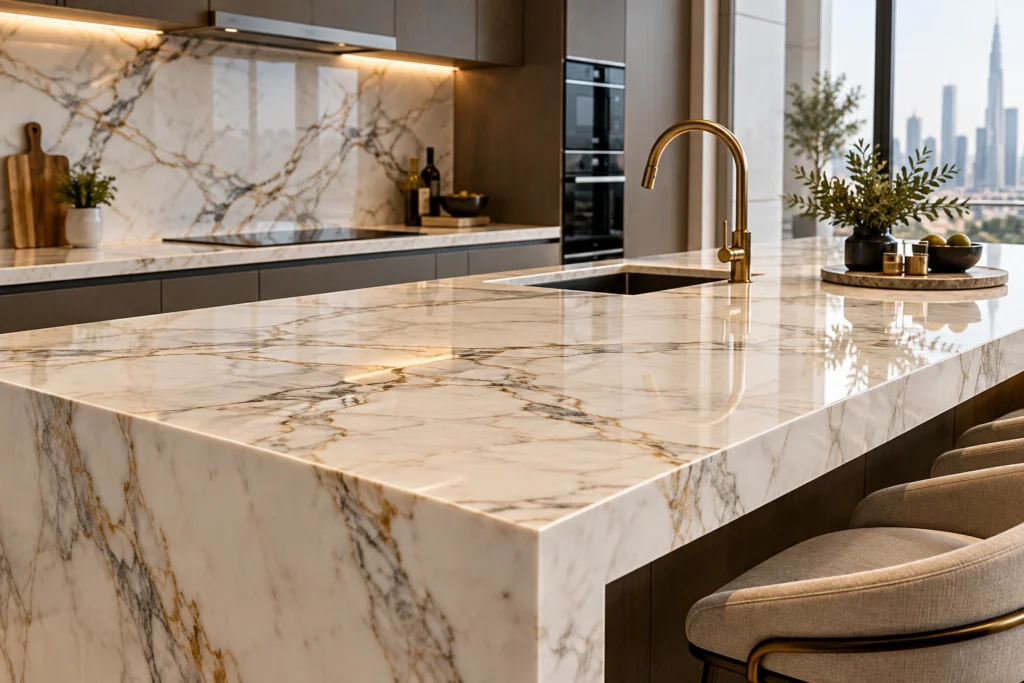
Marble countertops remain the benchmark for kitchens and bathrooms that are meant to feel special rather than simply functional. Whether you are drawn to the soft veining of Carrara, the drama of Calacatta, or the warmth of Emperador, the right slab can define the character of an entire room. Al Rafahia’s marble countertops, paired with expert guidance on selection and care, give UAE homeowners a surface that stays beautiful for decades.