




Silestone Quartz for Modern UAE Kitchens and Commercial Interiors
Introduction
When a project calls for a surface that looks premium, performs under pressure, and needs almost no maintenance, Silestone quartz is usually near the top of the shortlist. As one of the most established engineered quartz brands in the world, Silestone quartz combines natural quartz crystals with resins and pigments to produce a surface that is harder than granite, completely non-porous, and available in a consistent palette that is easy to specify across an entire project. For UAE kitchens, bathrooms, and commercial interiors where both looks and durability matter, Silestone quartz has become a default recommendation for architects and fit-out contractors alike.
What Is Silestone Quartz?
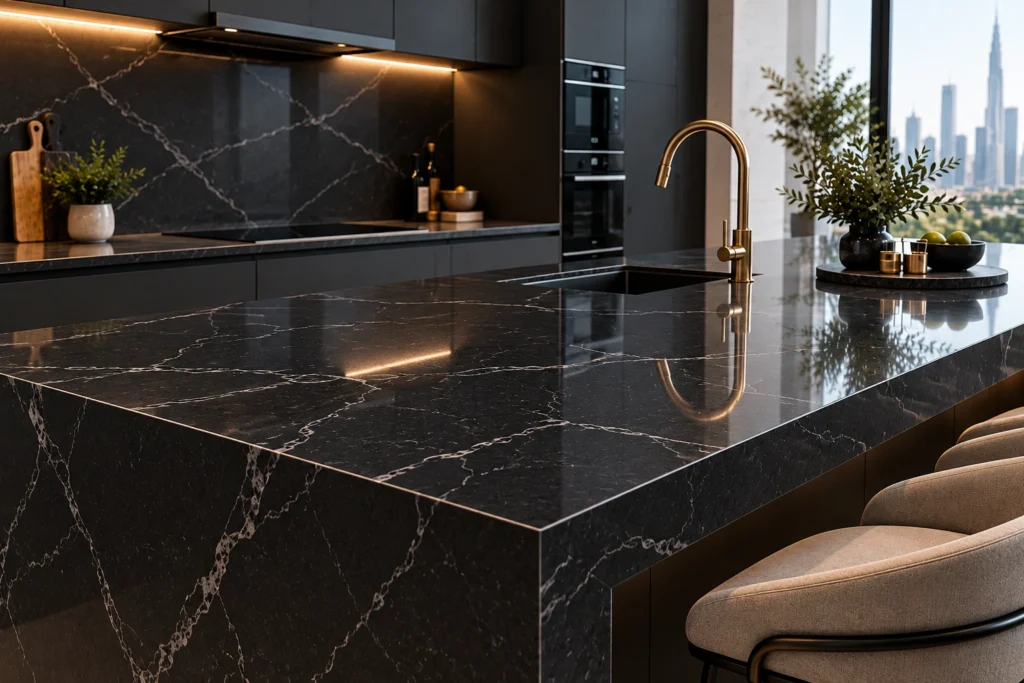
Silestone quartz is an engineered stone made from roughly 90 percent natural quartz combined with resins, pigments, and other additives, then compressed under high pressure. The result is a dense, uniform slab that is far more scratch- and stain-resistant than natural stone, while still offering the visual richness that plain solid-surface materials lack.
Key Advantages of Silestone Quartz for UAE Interiors
- Non-porous surface — resists bacteria, oil, and staining without any sealing, which matters in the UAE’s warm, humid climate.
- Consistent color batches — makes it far easier to match large kitchen islands, reception counters, or multi-unit developments.
- High scratch and impact resistance — suited to busy family kitchens and high-traffic commercial counters.
- UV-stable formulations available — help colors stay true in sun-exposed areas near glazing and skylights.
- Low, simple maintenance — daily cleaning with mild soap and water is enough to keep the surface looking new.
Popular Silestone Colors and Finishes
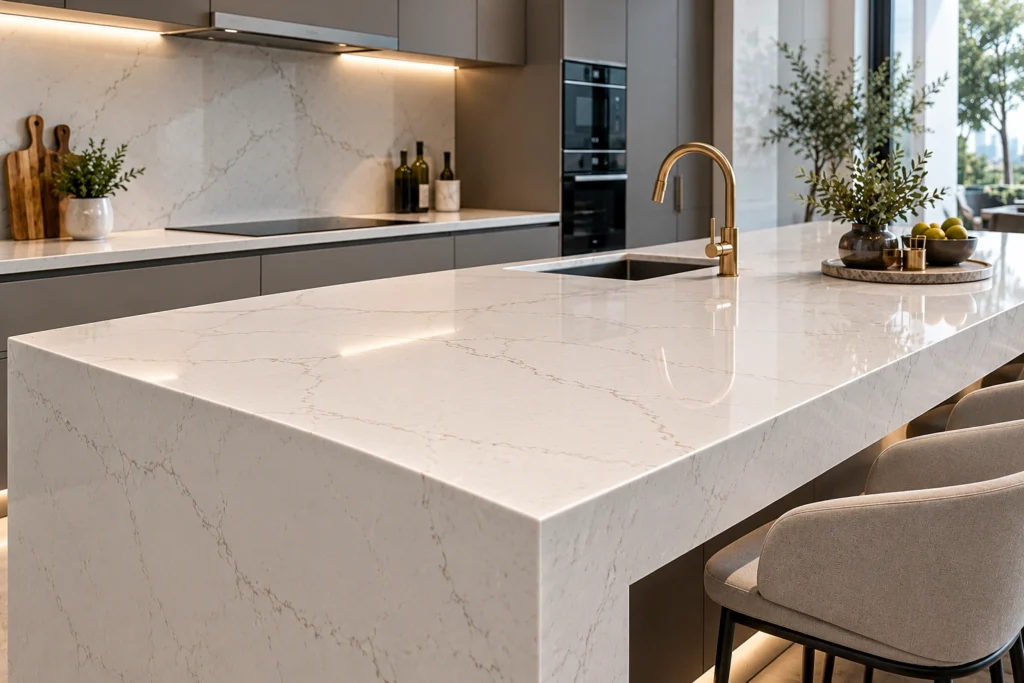
Silestone’s collections continue to expand toward bright, veined whites and warmer, textured neutrals that suit both minimalist and traditional interiors. Polished finishes deliver a bright, reflective surface that works well under kitchen lighting, while suede and matte finishes give a softer, more tactile look that has become increasingly popular for waterfall islands and bathroom vanities in newer UAE projects.
Silestone Quartz for Commercial and Hospitality Spaces
Restaurants, hotel kitchens, and retail counters put surfaces through far more daily wear than a residential kitchen ever will. Silestone quartz holds up well against constant cleaning with commercial-grade chemicals, resists staining from oils and sauces, and keeps its appearance over years of continuous use — all without the sealing schedule that natural stone requires in a commercial setting.
Selecting the Right Silestone Slab for Your Project
Start with the overall lighting and cabinetry tone of the space, since quartz colors can read differently under warm versus cool lighting. For large kitchen islands or long commercial counters, always confirm slab availability and batch matching before finalizing a design, since color consistency across multiple slabs can vary slightly between production runs.
It also helps to request a full-size sample rather than a small chip, since veining and fleck patterns are much easier to judge across a larger surface.
Sustainability and Indoor Air Quality
Many Silestone quartz ranges are manufactured with a share of recycled glass and mineral content, and the brand has invested heavily in reducing crystalline silica dust during production — a factor increasingly asked about by architects specifying materials for LEED-aligned or wellness-focused UAE developments. The non-porous surface also means no volatile sealants are needed after installation, which some clients weigh alongside its practical benefits.
Silestone Quartz vs Natural Granite and Marble
Buyers weighing engineered against natural stone usually want a direct comparison. Granite offers more visual variation between slabs but requires periodic sealing, while marble delivers unmatched veining at the cost of higher porosity. Silestone quartz sits between the two on maintenance: it needs no sealing at all, resists staining completely, and offers far more consistent color matching across large projects, though it cannot fully replicate the natural translucency of onyx or the organic veining of marble.
Frequently Asked Questions
Is Silestone quartz heat resistant?
Silestone quartz tolerates everyday kitchen heat well, but like most engineered stone it can be damaged by direct contact with very hot pans, so trivets are recommended for extreme heat.
Does Silestone need sealing?
No. Its non-porous surface never needs sealing, which is one of the main reasons it is chosen over natural stone for busy commercial kitchens.
Al Rafahia: Your Silestone Quartz Partner in the UAE
Al Rafahia stocks and sources Silestone quartz for residential, commercial, and hospitality projects throughout the UAE. Our team helps clients choose the right color and finish, coordinates cut-to-size fabrication, and manages delivery timelines so that kitchens, bathrooms, and commercial counters are installed on schedule.
Conclusion
Silestone quartz gives UAE homeowners, designers, and commercial clients a surface that looks as good after ten years of daily use as it did on installation day. Its non-porous finish, consistent color batches, and low-maintenance nature make it one of the most practical premium surfaces available today. For genuine Silestone quartz and expert fabrication support, Al Rafahia is ready to help bring your kitchen or commercial project to life.